Branching into danger: Fatalities illustrate tree care hazards
Date Posted: 06/25/2026
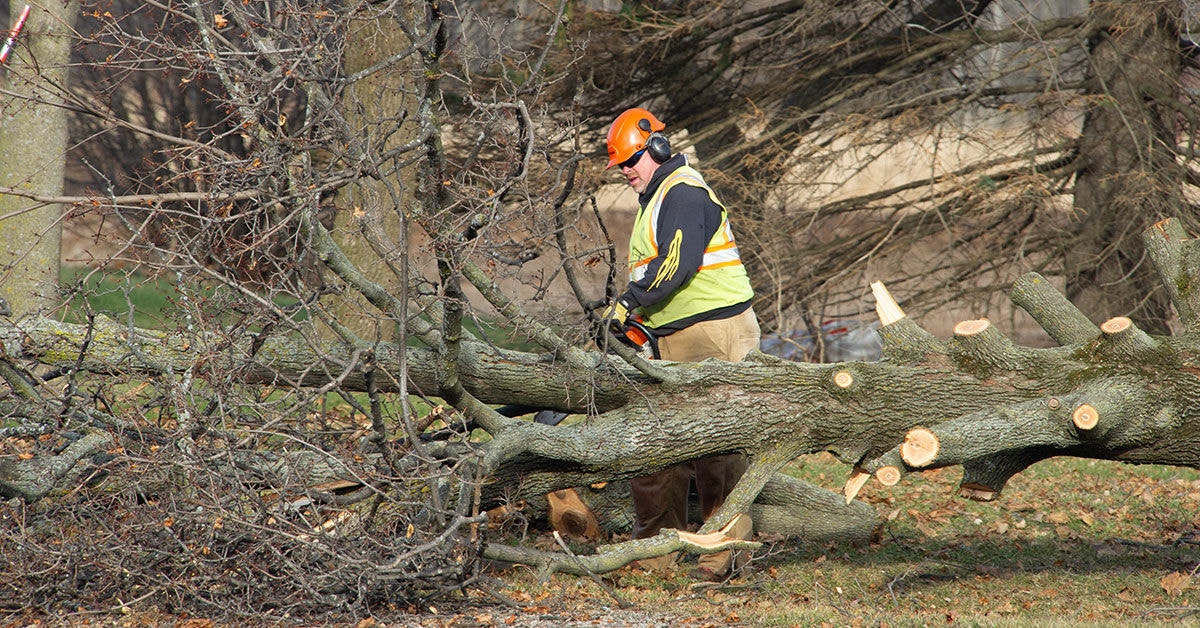
Tree care work can turn deadly. “A tree trimmer suffered fatal injuries when equipment came into contact with an unprotected power line.” “A worker died while operating a woodchipper.” “A branch from an adjacent tree fell and struck an arborist on the head, resulting in fatal injuries.” “An operator died after falling from a boom lift while tree trimming.”
Despite the dangers in tree trimming and removal, OSHA regulations do not currently include a comprehensive standard for the industry. Yet, the absence of a workplace safety and health standard doesn’t mean there are no serious, recognized hazards or that tree care employers are off the hook.
Employers in this industry must identify and assess the hazards workers are exposed to and follow the hierarchy of controls — elimination, substitution, engineering controls, administrative controls, and, lastly, personal protective equipment (PPE) — to determine the most feasible and appropriate ways to protect workers.
Different sites, similar hazards
While each tree care worksite is different, the hazards are much the same. Tree care workers are at risk from falls, electrocution, or being struck by trees. They face hazards related to surrounding traffic, tools and equipment like chainsaws and woodchippers, and aerial lifts. Even extreme heat and cold can become life-threatening, and rain and wind can quickly create unsafe conditions.
Control measures are important, but safety and health training is also key to addressing these hazards. It helps workers identify and prepare for them. Training should include topics such as:
- Identifying fall, struck-by, and electrical hazards;
- Proper use of tools and equipment;
- Climbing techniques;
- Using and maintaining PPE;
- Emergency preparedness;
- Traffic control; and
- Drop zone hazards.
In addition, tool and equipment manuals provide guidelines for safe operation and use, and some manufacturers and distributors offer training on the products they sell.
Is a federal rule on the way?
In OSHA’s last regulatory agenda, the agency projected a proposed rule for Tree Care Operations in April 2026; however, it has yet to be published. In fact, the rule has been over 20 years in the making, as the Tree Care Industry Association petitioned OSHA in May 2006 to begin working on a rule.
A recent (May 2026) Advisory Committee on Construction Safety and Health (ACCSH) meeting led to a unanimous vote in favor of OSHA moving ahead with its proposed rule.
How Safety Management Suite Can Help

Workers involved in tree care operations may need training on PPE, hand and power tools, fall protection, and more. The Training area of the J. J. Keller® SAFETY MANAGEMENT SUITE contains online modules and classroom presentations on a wide range of topics. Supplement your training with resources such as handouts, five-minute talks, scenarios, and quizzes, found in the Training Asset Library.
E-mail Newsletter
Sign up to receive the weekly EHS Insider email newsletter for safety articles, news headlines, regulatory alerts, industry events, webcasts, and more.