Fall protection training required for General Industry
Date Posted: 03/20/2026
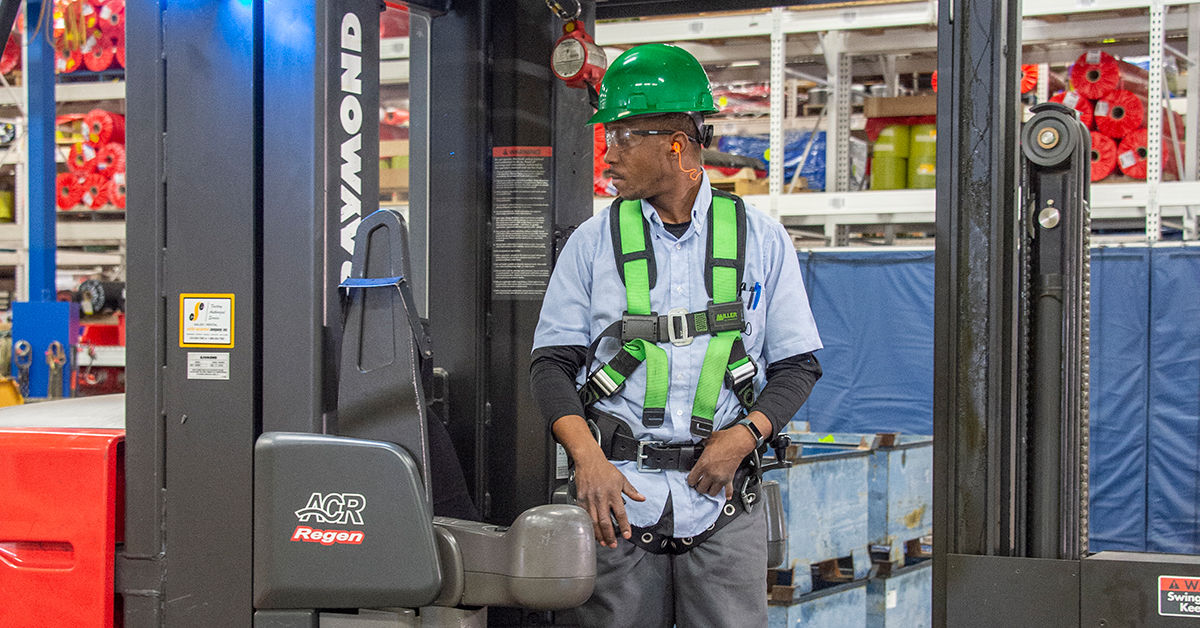
Fall protection is defined as any means used to protect workers from falls during work in areas where fall hazards exist. Fall protection is essentially a system that protects workers who could lose their balance at any given height (four feet in General Industry) from falling, usually resulting in injuries.
Training is an effective way to protect workers from slips, trips, and falls, and one of the most critical steps employers can take to prevent injuries and fatalities. Before workers are exposed to a fall hazard, you must provide training for those who use personal fall protection systems or who are required to be trained under any section in 29 CFR 1910 Subpart D, Walking-Working Surfaces. Training must cover at least the following topics:
- The nature of the fall hazards in the work area and how to recognize them;
- The procedures to be followed to minimize those hazards;
- The correct procedures for installing, inspecting, operating, maintaining, and disassembling the personal fall protection systems that the worker uses; and
- The correct use of personal fall protection systems and equipment specified in paragraph 1910.30(a)(1), including, but not limited to, proper hook-up, anchoring, and tie-off techniques, and methods of equipment inspection and storage, as specified by the manufacturer.
Training provisions
A lot of the sections in the Walking Working Surfaces regulations require training, and many others imply a need for training. For instance, there is no specific requirement for training workers on how to conduct ladder inspections, but they must understand how to perform those inspections properly.
The primary training regulation is 1910.30, which requires training workers who use personal fall protection. However, it also requires employers to provide training required by any other section of Subpart D. Some training provisions apply only in specific situations. They include:
- Workers using scaffolds and rope descent systems;
- Workers on residential roofs where fall protection isn’t feasible;
- Where dock boards without guardrails are used only for motorized equipment;
- Repair pits, service pits, and assembly pits less than 10 feet in depth;
- Outdoor advertising (like billboards); and
- Slaughtering facility platforms.
In most cases, even those provisions primarily refer back to 1910.30.
Workers must be retrained when:
- There are changes in the workplace, type of fall protection systems, or equipment used that makes previous training invalid;
- They demonstrate a lack of understanding or skill necessary to use the equipment or perform their job safely.
Who can deliver training?
Training must be delivered by a “qualified person.” The qualifications could be from training, experience, or some combination of both. Basically, the employer should consider the person’s background and then determine if that person is qualified to deliver the training. There is no special certification required to be considered a “qualified” trainer.
If there are problems with the training delivered, OSHA can cite the employer for failure to deliver training. For example, if workers don’t seem to have the knowledge required to work safely (or someone got injured in a fall) then OSHA may question whether the training was adequate.
How Safety Management Suite Can Help
How Safety Management Suite Can Help

If you’ve got questions on training for fall protection in General Industry - or questions regarding any of the hundreds of topics in the J. J. Keller® SAFETY MANAGEMENT SUITE – you can ask them using our Expert Help feature. Our compliance experts research the regulations and guidance and will respond within one business day.
E-mail Newsletter
Sign up to receive the weekly EHS Insider email newsletter for safety articles, news headlines, regulatory alerts, industry events, webcasts, and more.