Occupational exposure is key to Bloodborne Pathogens applicability
Date Posted: 07/27/2026
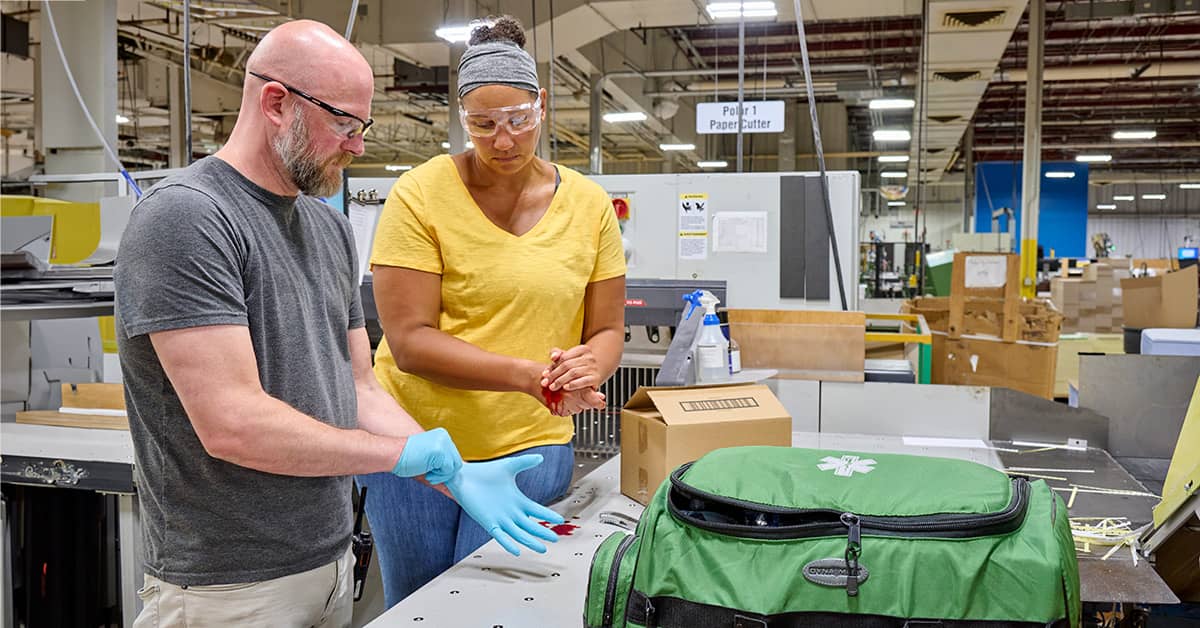
While many employers associate exposure to bloodborne pathogens with healthcare workers, there are many other occupations, including first aid team members, housekeeping personnel, and various other workers who may be at risk of occupational exposure to bloodborne pathogens (BBP).
In fact, nearly 43 percent of bloodborne pathogen citations go to industries other than healthcare. Even though OSHA’s regulation at 1910.1030 has been around for years, it’s still one of the most cited with well over 1,000 violations each year.
What are bloodborne pathogens?
Bloodborne pathogens are microorganisms, such as human immunodeficiency virus (HIV) and hepatitis B virus, that are transmitted through blood and certain other body fluids. Exposure to these materials represents a significant health hazard in the workplace. This hazard can be minimized or eliminated, however, using a combination of engineering and workplace practice controls, personal protective equipment, housekeeping measures, vaccination, post-exposure evaluation and follow-up, training, and other measures.
Know what puts employees at risk
Whether the BBP standard applies hinges on whether any workers have occupational exposure to blood or other potentially infectious materials (OPIM). Occupational exposure is defined in the standard as “reasonably anticipated skin, eye, mucous membrane, or parenteral contact with blood or OPIM that may result from the performance of an employee’s duties.” In layman’s terms, this means getting blood or OPIM in your eyes, nose, mouth, or on broken skin. Examples of workers who may have this type of exposure include those who are designated to provide first aid or who are assigned to clean up after an injury.
OSHA does not list jobs or tasks with occupational exposure, so employers must determine which jobs are covered at their workplace. If only some workers in a job class have occupational exposure, the employer must identify which tasks in those jobs present occupational exposure.
BBP Training
All employees who have occupational exposure must be trained in bloodborne pathogens procedures. For BBP training to be required for an employee, contact with blood or OPIM must be reasonably anticipated, and this contact must result from the performance of the employee’s duties. As an example, an office worker would not reasonably anticipate having contact with blood or OPIM. However, if that employee is assigned to perform first aid when coworkers are bleeding, they are considered to have occupational exposure.
Training must be provided upon initial assignment, at least annually thereafter, and when new or modified tasks or procedures affect an employee’s occupational exposure. HIV and HBV laboratory and production facility workers must receive specialized initial training, in addition to the training provided to all employees with occupational exposure.
Training must be presented at an educational level and in a language that employees understand and they must have the opportunity to ask questions during training.
How Safety Management Suite Can Help

If you have questions about OSHA’s bloodborne pathogens standard, we can help! The Expert Help tool is conveniently linked from the homepage dashboard of the J. J. Keller® SAFETY MANAGEMENT SUITE. It gives you direct access to our trusted team of in-house experts — acknowledged leaders in the safety, regulatory, and compliance fields — who are standing by to help answer your toughest compliance questions.
E-mail Newsletter
Sign up to receive the weekly EHS Insider email newsletter for safety articles, news headlines, regulatory alerts, industry events, webcasts, and more.