OSHA HazCom Updates: What Employers Need to Do Before November 20, 2026
Date Posted: 11/09/2026
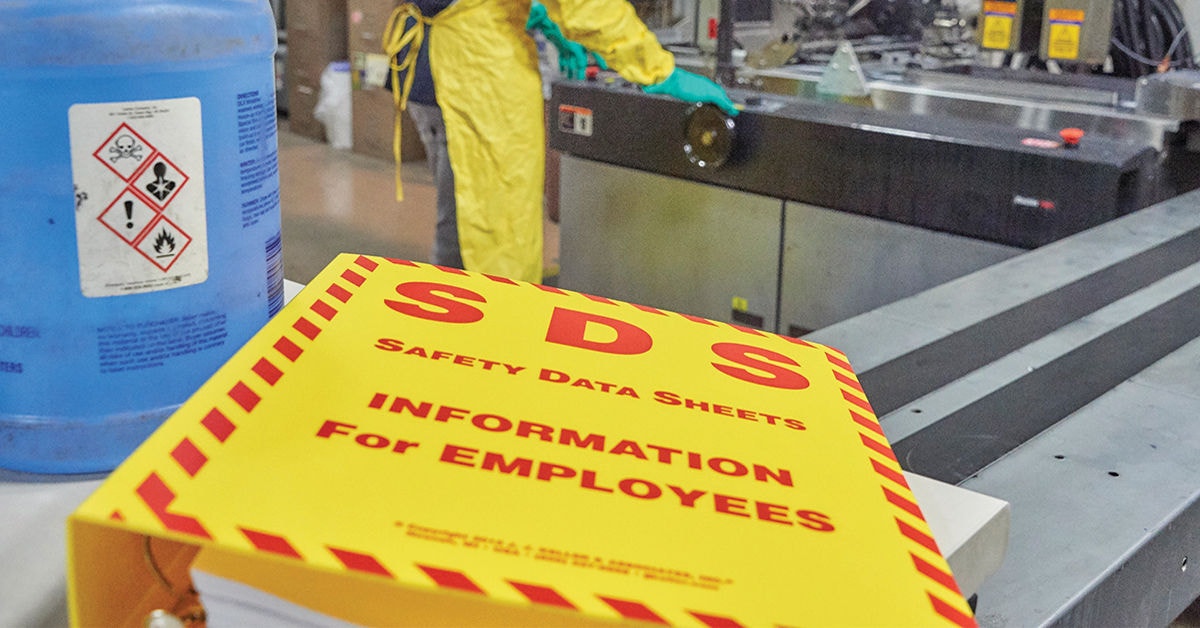
OSHA’s Hazard Communication (HazCom) final rule was published in the Federal Register on May 20, 2024, and changes took effect July 19, 2024. The agency also issued technical corrections in 2024 and 2026.
The revisions to 29 CFR 1910.1200 include added, updated, and removed definitions; changes to hazard classification; revised labeling provisions for packages released for shipment, bulk shipments, and small containers; updates to safety data sheet (SDS) subsections; and changes related to trade secrets.
Who is impacted
The standard contains multiple compliance dates at 29 CFR 1910.1200 paragraph (j) for chemical manufacturers, importers, distributors, and employers. The November 20, 2026, employer deadline is driven by changes to chemical hazard classifications for aerosols, desensitized explosives, and flammable gases.
According to 1910.1200(j), chemical manufacturers, importers, and distributors evaluating substances (see the definition in 1910.1200(c)) based on the new hazard classifications had until May 19, 2026, to:
- Reclassify the substances under revised criteria,
- Update their SDSs and shipping labels for these substances, and
- Otherwise be in compliance with all the modified provisions of the standard for those substances.
November 20, 2026, employer requirements
Employers who purchase substances that are aerosols, desensitized explosives, and flammable gases will receive (or may already have received) revised SDSs and see updated container labels with their shipments.
In addition, according to 1910.1200(j), all employers must, as necessary:
- Update any alternative workplace (in-house) labeling per 1910.1200(f)(6);
- Update their HazCom training program required by 1910.1200(h)(1); and
- Provide additional employee training in line with 1910.1200(h)(3) for newly identified physical, health, or other hazards covered by the standard.
Employers will also need to retain any new SDSs they receive. However, if they have not purchased new inventory, they’re not required to contact the manufacturer, importer, or distributor for a new SDS. Still, an employer may proactively request new ones from their suppliers anyway.
Common compliance gaps
HazCom is one of OSHA’s most frequently cited standards. Top violations include:
- Lack of a written program, 1910.1200(e)(1)
- Inadequate, or lack of, information and training, 1910.1200(h)(1)
- SDSs not readily accessible in the work area during each work shift, 1910.1200(g)(8)
- SDSs not available for each covered hazardous chemical, 1910.1200(g)(1)
- Unlabeled containers of hazardous chemicals in the workplace, 1910.1200(f)(6)(ii)
How to start preparing
The following checklist can be used to help employers prepare for the November 20 deadline.
SDSs
- Maintain an SDS for each covered hazardous chemical.
- Ensure SDSs are readily accessible in the work area during each work shift.
- Review new or revised SDSs for new or changed hazards that may affect in-house labeling and/or employee training.
Labels
- Ensure incoming containers have appropriate HazCom labels.
- Ensure all containers of hazardous chemicals in the workplace are properly labeled.
- Update in-house labels to reflect new or changed hazards identified in new or revised SDSs.
Written HazCom program
- Explain how you’ll meet the requirements for labels and other forms of warning, SDSs, and employee information and training.
- Describe methods for informing employees about hazards associated with non-routine tasks and chemicals contained in unlabeled pipes in their work areas.
- Include a list of hazardous chemicals known to be present in the workplace.
Employee information and training
- Train employees at the time of initial assignment and whenever new chemical hazards are introduced.
Resources available from J. J. Keller
Safety Management Suite contains resources to help you meet HazCom requirements:
- Product List: Create and maintain your chemical product inventory.
- SDS Search: Search for SDSs in our library.
- SDS Center: Add your own SDSs or search in our library.
- SDS Binders: Create SDS binders.
Training (classroom and online)
- HazCom for Construction
- HazCom Training: Introduction to Hazard Communication & GHS
- HazCom Training: GHS Container Labels
- HazCom Training: GHS Safety Data Sheets (SDS)
Plans & Policies (safety plan templates)
- Hazard communication (HazCom) program
- Hazard communication (HazCom) program for construction
- State comparison tables: Identify the differences in federal and state HazCom regulations
How Safety Management Suite Can Help

Chemical Management in the J. J. Keller® SAFETY MANAGEMENT SUITE is designed to help you manage the covered hazardous chemicals in your workplace. You can develop and maintain your chemical inventory, search our database for SDSs (or upload your own), and create electronic SDS binders.
E-mail Newsletter
Sign up to receive the weekly EHS Insider email newsletter for safety articles, news headlines, regulatory alerts, industry events, webcasts, and more.