Ladder Usage and Inspections
Date Posted: 11/12/2026
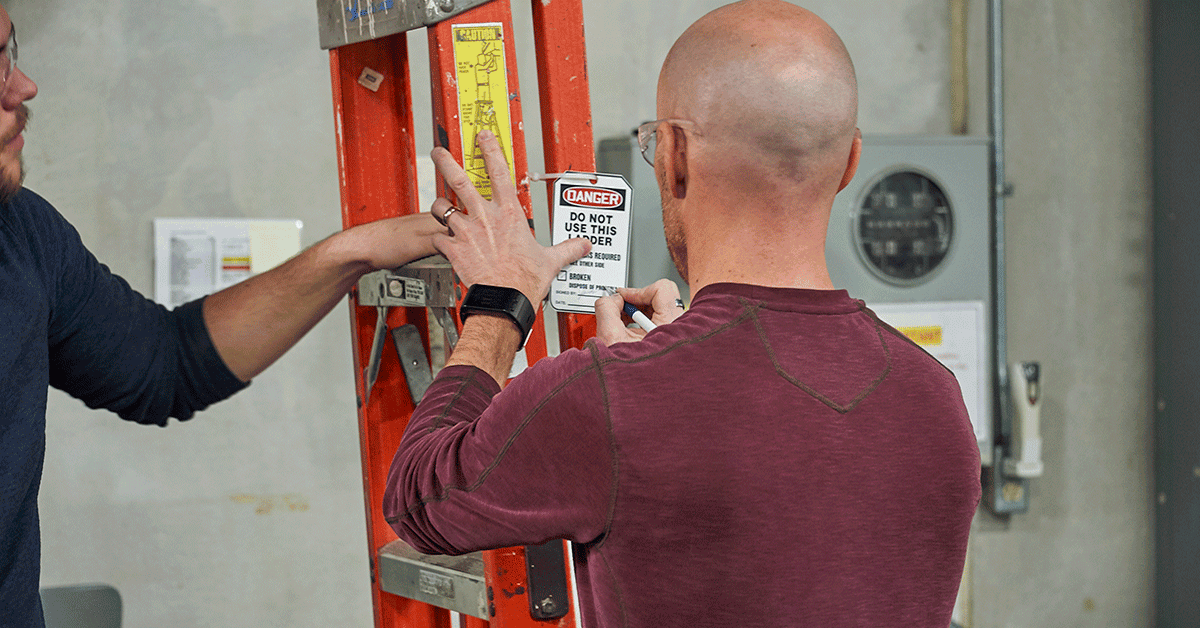
It is always a good idea to inspect any tools or equipment before you start using them, but ladder inspections are mandatory. Employees must inspect ladders before initial use in each work shift, and more frequently as necessary, to identify any visible defects that could cause employee injury. Defective ladders must be tagged and removed from service until repaired or replaced.
The manufacturer has a label or sticker with instructions on how to use the ladder and the weight capacity on the ladder. Make sure the labels are always available and can be read.
Inspection warning signs
OSHA recognizes that the inspection done before the first use of the shift may be different from an inspection conducted “as necessary.” For example, an inspection done before the first use may include a check that the rungs are parallel and the footing is stable, but an inspection conducted if a ladder is struck by a vehicle may look for structural cracks, missing rungs, or bent spreaders.
When employees climb a ladder, it should not wobble. If it is wobbly, it may mean that the ladder is not strong enough for the weight of the employee and any carried equipment. A stronger ladder or a different type of ladder will need to be used.
A wobble could also mean that the ladder might be damaged and should not be used. Inspect the ladder for damage. The ladder should not have any bent rungs or cracks. If the ladder is damaged then it needs to be taken out of service, fixed, or disposed of. Depending on the ladder height and how high the employee is on the ladder, the employee could suffer serious injuries.
Using ladders safely
Remind employees that they should not use different types of ladders to make up one ladder. Always use the same ladder design materials from the same manufacturer when putting together a ladder. Always use ladder extensions from the same manufacturer; do not mix and match ladder parts.
Make sure employees are following the weight limits on the ladders and including the weight of any equipment worn while using the ladder.
Remind employees that they should always use a ladder that safely reaches the height they need, and not to work from the top step on the ladder. The ladder should be placed at an angle that always extends at least a quarter of the working height of the ladder. The ladder rungs should also be skid resistant so employees do not slip and fall when climbing the ladder.
If using a straight ladder, tell employees that there must always be at least 3 feet above an upper landing surface. The extra height will help them to get on top of the working surface and use the last steps as support to get them from the ladder to the working surface.
How Safety Management Suite Can Help
How Safety Management Suite Can Help

Use the convenient Daily Inspection – Portable Ladders workplace inspection found in the J. J. Keller® SAFETY MANAGEMENT SUITE to help identify potential hazards. You’ll find it in the Audits and Inspections area within the Checklists link. We have checklists on more than 100 topics ranging from Aerial Lifts to Warehouses.
E-mail Newsletter
Sign up to receive the weekly EHS Insider email newsletter for safety articles, news headlines, regulatory alerts, industry events, webcasts, and more.