Top 5 construction violations for small employers
Date Posted: 05/15/2026
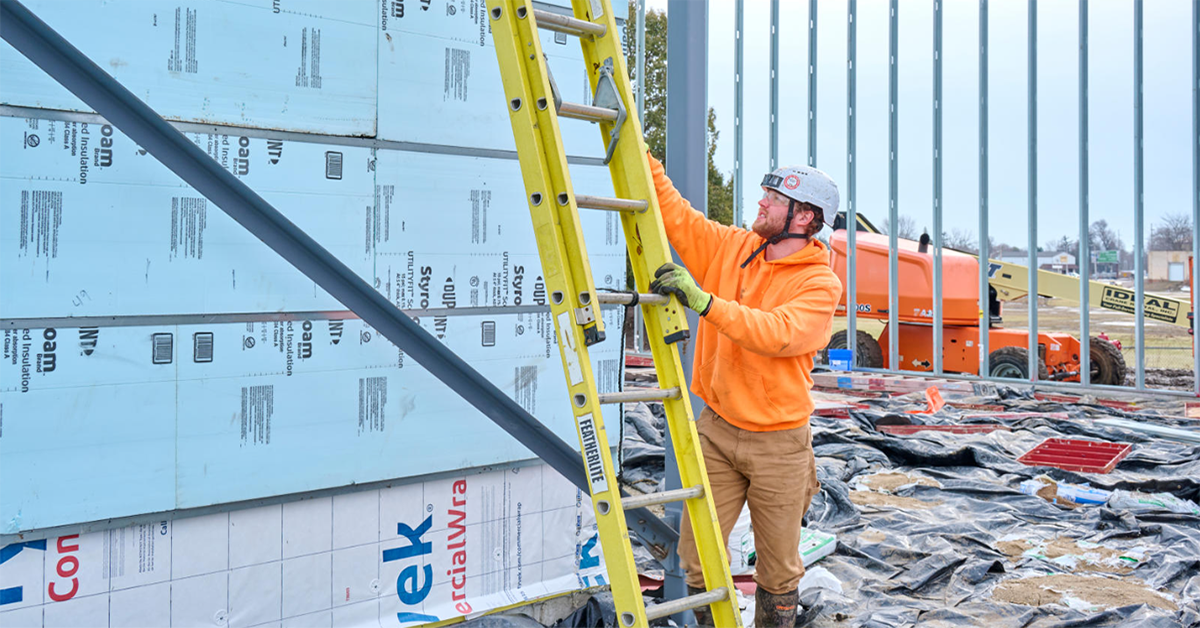
For smaller construction employers (those with fewer than 100 employees), understanding where violations most often occur can help focus limited resources on the controls and work practices that protect workers and prevent costly surprises during an inspection. Below are the top five violations for small construction employers:
1. 1926.501 – Duty to have fall protection
2. 1926.652 – Requirements for protective systems (excavations)
3. 1926.651 – Specific excavation requirements
4. 1926.1053 – Ladders
5. 1926.1153 – Respirable crystalline silica
Fall protection for construction
Most construction companies must follow some provisions of the fall protection rule at 29 CFR 1926 Subpart M. It sets a threshold height of six feet, meaning that employers must protect employees from fall hazards and falling objects whenever an affected employee is six feet or more above a lower level. Although not all employees may be working at such a height, they might need protection from falling objects.
Protection must also be provided for construction workers who are exposed to the hazard of falling onto dangerous equipment; for example, working over machinery with open drive belts, pulleys or gears, or open vats of degreasing agents or acid.
Initially, employers must assess the workplace to determine if walking-working surfaces have the necessary strength and structural integrity to safely support workers. Once it’s determined that the work surfaces will safely support the work activity, the employer must determine whether fall protection is required per 1926.501. If fall protection is required, select and provide workers with fall protection systems that comply with the criteria at 1926.502.
Excavation and trenching
Excavation and trenching are among the most hazardous construction operations. Cave-ins pose the greatest risk and are much more likely than other excavation-related accidents to result in worker fatalities.
OSHA’s 1926 Subpart P establishes safety requirements to protect employees from hazards associated with such work, including cave‑ins, falling loads, hazardous atmospheres, and equipment‑related hazards. Excavations, adjacent areas, and protective systems must be inspected by a competent person daily and as conditions change.
Ladders
When working from a ladder, the fall protection is setting up and using the ladder correctly per the regulations at 1926 Subpart X—Stairways and ladders. Safe ladder use is found in 1926.1053(b). There is no other fall protection required for ladders.
When portable ladders are used for access to an upper landing surface, the ladder side rails must extend at least three feet above the upper landing surface to which the ladder is used to gain access. Other common violations are using the top step of a ladder as a step and using ladders for other than their intended purpose.
Respirable crystalline silica
Workers who cut or grind concrete, drill into masonry, or perform similar activities may be exposed to dangerous levels of respirable crystalline silica. For covered work, 1926.1153 requires employers to implement protective measures, including controls to limit employee exposure, a written exposure control plan, medical surveillance, employee training, and recordkeeping.
How Safety Management Suite Can Help

Whether you’re looking for an overview of a safety topic or a word-for-word regulation, Reference Hub in the J. J. Keller® SAFETY MANAGEMENT SUITE can help. Use the Topic Based Navigation to choose the topic you’re interested in. Inside, you’ll find ezExplanations, federal OSHA regulations, state comparison tables, FAQs, letters of interpretation, and more.
E-mail Newsletter
Sign up to receive the weekly EHS Insider email newsletter for safety articles, news headlines, regulatory alerts, industry events, webcasts, and more.