Combustible dust: Prevent tiny particles from creating big explosions
Date Posted: 02/23/2026
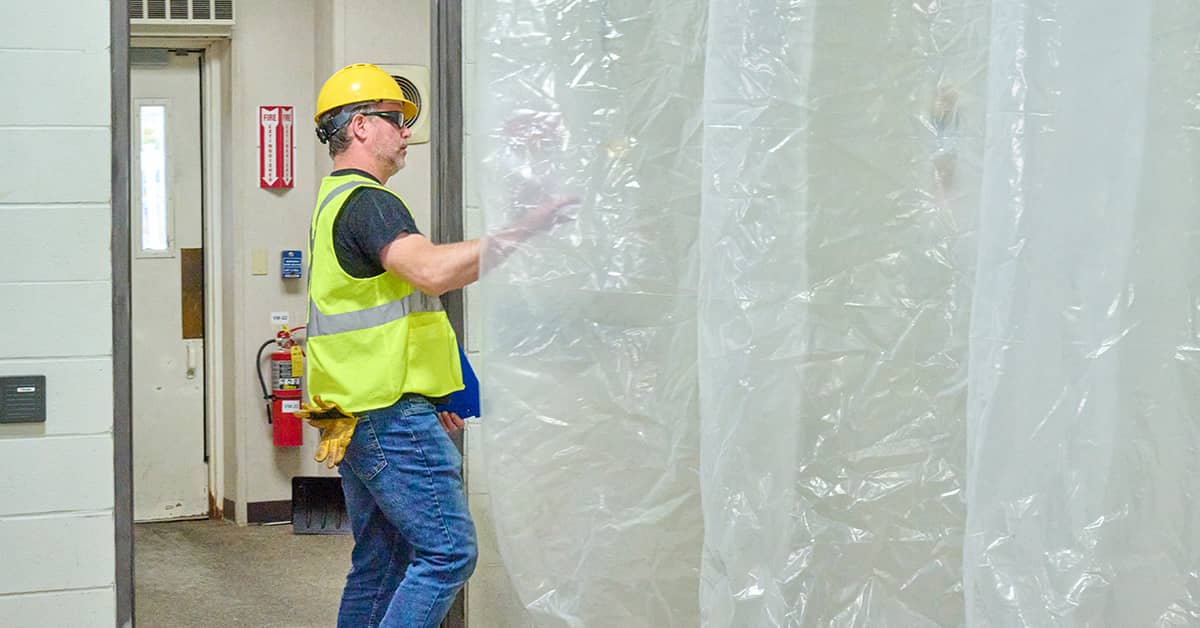
A dust explosion can cause deaths and serious injuries and can destroy entire buildings. In many combustible dust incidents, employers and employees didn’t know that a hazard even existed. Combustible dusts are fine particles, fibers, chips, chunks, or flakes that could be an explosion hazard when they’re suspended in air under certain conditions.
Almost any material that will burn in air in a solid form can catch fire and explode as a dust. Examples include:
- Food (e.g., candy, sugar, spice, starch, flour, feed)
- Tobacco
- Plastics
- Wood
- Paper
- Pulp
- Rubber
- Pesticides
- Pharmaceuticals
- Dyes
- Coal
Under certain conditions, even materials that don’t burn when in larger form, such as aluminum or iron, can explode or catch fire as a dust.
How dust explosions can happen
The familiar fire triangle is made up of oxygen, an ignition source (heat), and fuel. All three conditions must be present for a fire to start. Because oxygen is normally always present in the air, fires are usually prevented by keeping the fuel separate from the ignition source.
In addition to the fire triangle elements, the “dust explosion pentagon” adds two more conditions: dispersion (when the accumulated dust is spread through the air and creates a dust cloud) and confinement (when the dust cloud is contained within a closed area, such as a warehouse or factory). Similar to the fire triangle, if one part of the pentagon is missing, a combustible dust explosion can’t occur.
If a dust cloud ignites in an enclosed area such as a room, vessel, ductwork, or process equipment, it burns very fast and may explode. Even if the initial explosion is small, it could shake up accumulated dust in the area to form another dust cloud. Often these secondary explosions are far more destructive.
Combustible dust buildup and control methods
Areas where dust can build up include:
- Conduit and pipe racks,
- Electrical cable trays,
- Floors, and
- On and around equipment (including leaks around dust collectors and ductwork).
To keep dust under control:
- Conduct regularly scheduled inspections,
- Clean up dust on a regular basis,
- Use proper dust collection systems and filters,
- Keep dust from escaping from equipment or ventilation systems,
- Use surfaces that are easy to clean,
- Provide easy access to inspect and clean hidden areas where dust might build up,
- Use cleaning methods that don’t stir up dust clouds, and
- Use vacuum cleaners approved for dust collection.
To prevent dust from igniting:
- Use proper wiring methods;
- Make sure electrically powered equipment (including forklifts) is approved for the location;
- Control static electricity (bond equipment to ground);
- Keep smoking areas, open flames, sparks, and heated surfaces separate from dusts;
- Follow a hot work permit program; and
- Follow a preventive maintenance program.
And finally, to minimize injuries and damage from a combustible dust explosion:
- Develop an emergency action plan,
- Maintain emergency exit routes,
- Set up operations in areas where the hazards are away from workers and equipment,
- Set up isolation barriers around hazards operations,
- Make sure dust handling equipment has pressure relief venting that’s directed away from workers and equipment, and
- Install specialized spark detection and fire suppression systems in dust handling equipment.
How Safety Management Suite Can Help

Our upcoming webinar, Dust Busters: Controlling hazardous workplace dusts, on Thursday, February 26, at 1:00 PM CDT, will cover the major dust hazard categories, exposure pathways and recognition, regulatory requirements and standards, and engineering and administrative controls. We’ll save time at the end of the webcast for your questions.
E-mail Newsletter
Sign up to receive the weekly EHS Insider email newsletter for safety articles, news headlines, regulatory alerts, industry events, webcasts, and more.