Do your operations fall under Process Safety Management?
Date Posted: 03/02/2026
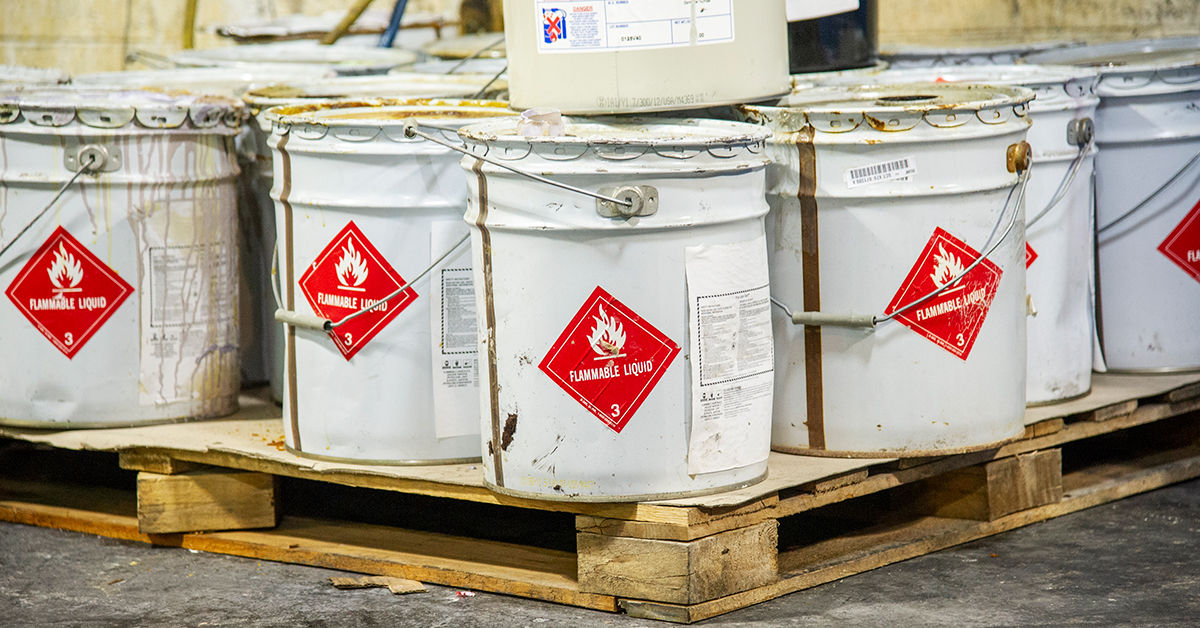
OSHA’s Process Safety Management of Highly Hazardous Chemicals (PSM) standard contains requirements for the management of hazards associated with processes using chemicals deemed to be “highly hazardous.”
For many types of businesses, such as refineries and chemical companies, it may be obvious that PSM applies. However, the regulation can apply to many other, perhaps not-so-obvious, employers, such as grocery stores, pulp mills, manufacturers, to name a few. (Conversely, some employers think they have PSM-covered processes when in fact they do not.)
Who is covered under Process Safety Management?
Under PSM, at 29 CFR 1910.119, a “process” includes almost any activity involving a highly hazardous chemical, including any use, storage, manufacturing, handling, or the on-site movement of these chemicals, or combination of these activities. The standard applies to any establishment having a “process” that involves either:
- A 1910.119 Appendix A-listed chemical at or above the specified threshold quantities (the amount, in pounds, necessary at any one point in time for coverage under the PSM standard). Over 130 chemicals listed in Appendix A, with threshold quantities ranging from 50 pounds to 15,000 pounds.
- 10,000 pounds or more of any flammable liquid or gas on site in one location. If an Appendix A-listed chemical is a flammable liquid or gas, the coverage threshold is the lower of the threshold quantity or 10,000 pounds.
The definition of “process” extends beyond a simple tank and includes interconnected vessels, as well as separate vessels that could impact each other if a release were to occur.
Exemptions
A few types of facilities and operations are exempt from PSM. The standard does not apply to any of the following:
- Retail facilities. OSHA will typically not issue PSM citations to retail facilities, as those facilities generally do not present the same degree of hazard as other PSM workplaces. In particular, current OSHA policy specifically prohibits issuing PSM citations to employers in the following North American Industry Classification System (NAICS) codes:
- 424510 - Grain and Field Bean Merchant Wholesalers;
- 424590 - Other Farm Product Raw Material Merchant Wholesalers; and
- 424910 - Farm Supplies Merchant Wholesalers.
- Oil or gas well drilling or servicing operations.
- Normally unoccupied remote facilities. (This means that employees are not permanently stationed at the remote location. This includes those sites for which periodic visits by employees may be made on a scheduled basis. Examples could include pump stations located miles from the main establishment. Employees may be assigned to check on the station as needed. But, the remote location must be geographically separated from other facilities and employees such that employees would not be affected by an explosion, vapor cloud of toxic gas, or other consequence of an uncontrolled release at the remote site.)
All establishments that have chemical processes should assess their operations for coverage under the Process Safety Management standard.
How Safety Management Suite Can Help

The Process Safety Management standard requires training employees, as do many other OSHA regulations. By using our OSHA General Industry Training at a Glance chart, you can quickly determine which regulations include training provisions and see an overview of the requirements.
The J. J. Keller® SAFETY MANAGEMENT SUITE provides unparalleled access to hundreds of training programs and customizable training resources, such as 5-minute safety talks, handouts, and quizzes.
E-mail Newsletter
Sign up to receive the weekly EHS Insider email newsletter for safety articles, news headlines, regulatory alerts, industry events, webcasts, and more.